What a Judge Looks For in a Repair File
In small claims court, paperwork outweighs recollection. Most judges will not rely on memory, emotion, or even testimony if the documents do not line up. The burden is on the landlord to show that the repair was needed, that the tenant gave notice, that the work was done properly, and that the amounts billed were reasonable. If even one link in that chain is missing, the judge may find for the tenant or reduce the amount awarded.
What a judge wants to see is a clear, chronological story told by records: a dated tenant notice, photos or video showing the problem, proof the landlord received and acted on the notice, documentation of communication with vendors, and a detailed invoice showing what was fixed. The repair record should show not just payment, but what was actually done. This is the difference between a document that stands up in court and one that falls apart on cross-examination.
It does not matter how well you remember the details. If you cannot hand the judge a file that shows what happened step by step, you will have a hard time defending your actions and your costs. The following sections show how to build a file that holds up under scrutiny.
Keep reading: Payroll Handyman vs On Call Vendor vs Property Manager Costs
Timestamps, Photo Metadata, and Why Camera Roll Screenshots Get Challenged
In court, a photo is only as good as its chain of custody. Judges and tenant advocates often challenge blurry screenshots, photos saved from text messages, or images that show up in a phone's camera roll without context. The most common question is, "How do I know when and where this was taken?"
Timestamps matter. Most digital photos automatically capture the date and time, and sometimes the GPS location, as metadata. Judges know this, and a photo with intact metadata is much stronger evidence than one without. If you save a photo from a messaging app or screenshot it, that metadata can be stripped away. A smartphone's photo details can show when the picture was taken, but screenshots usually show the date of the screenshot, not the date of the original event.
To avoid challenges, always use original photos. Take pictures directly with your phone or camera, and upload them to your recordkeeping system, not just to your phone's gallery. Do not rely on screenshots of tenant texts as proof of the condition. Printouts of photos that show the date taken, or a digital record that logs the upload time, will help confirm the timeline if the case ends up in court.
Logging the Tenant Notice: Date Received, Method, and Exact Wording
The starting point for any repair dispute is the tenant's notice. Most state laws require the tenant to notify the landlord of a problem before the clock starts ticking on any repair obligation or rent abatement claim. If you cannot show when, how, and what the tenant reported, your case will be weak.
Record the Date and Method
Write down the date the notice was received and how it came in: text, email, phone call, letter, or a maintenance portal. Courts prefer written notices, but verbal reports are common. If a tenant calls, follow up with a text or email summarizing the issue and ask for confirmation. This creates a written record, even if the tenant originally called.
Copy the Exact Wording
Do not paraphrase the tenant's complaint. In court, the difference between "the bathroom faucet drips" and "the bathroom faucet is spraying water all over" can affect the judge's assessment of urgency and damages. If it was a text or email, save or print the message as it was written. If it was a phone call, note the tenant's exact words and time of the call.
Attach Supporting Files
If the tenant sent photos or video, save those alongside the initial notice. Keeping the original file, rather than a screenshot or forwarded image, helps maintain the photo's metadata. File all documents and images together under the date of the notice for easy retrieval.
Keep reading: Security Deposit Deductions: Wear and Tear Mistakes to Avoid
Vendor Invoices That Show Scope of Work, Not Just a Total
A generic invoice that just says "Plumbing: $200" will not help you in small claims court. Judges want to see what was actually done, who did it, and when. The more detail, the better. A solid invoice lists the parts replaced, labor performed, time spent, and any materials used, along with the company name, contact information, and date of service.
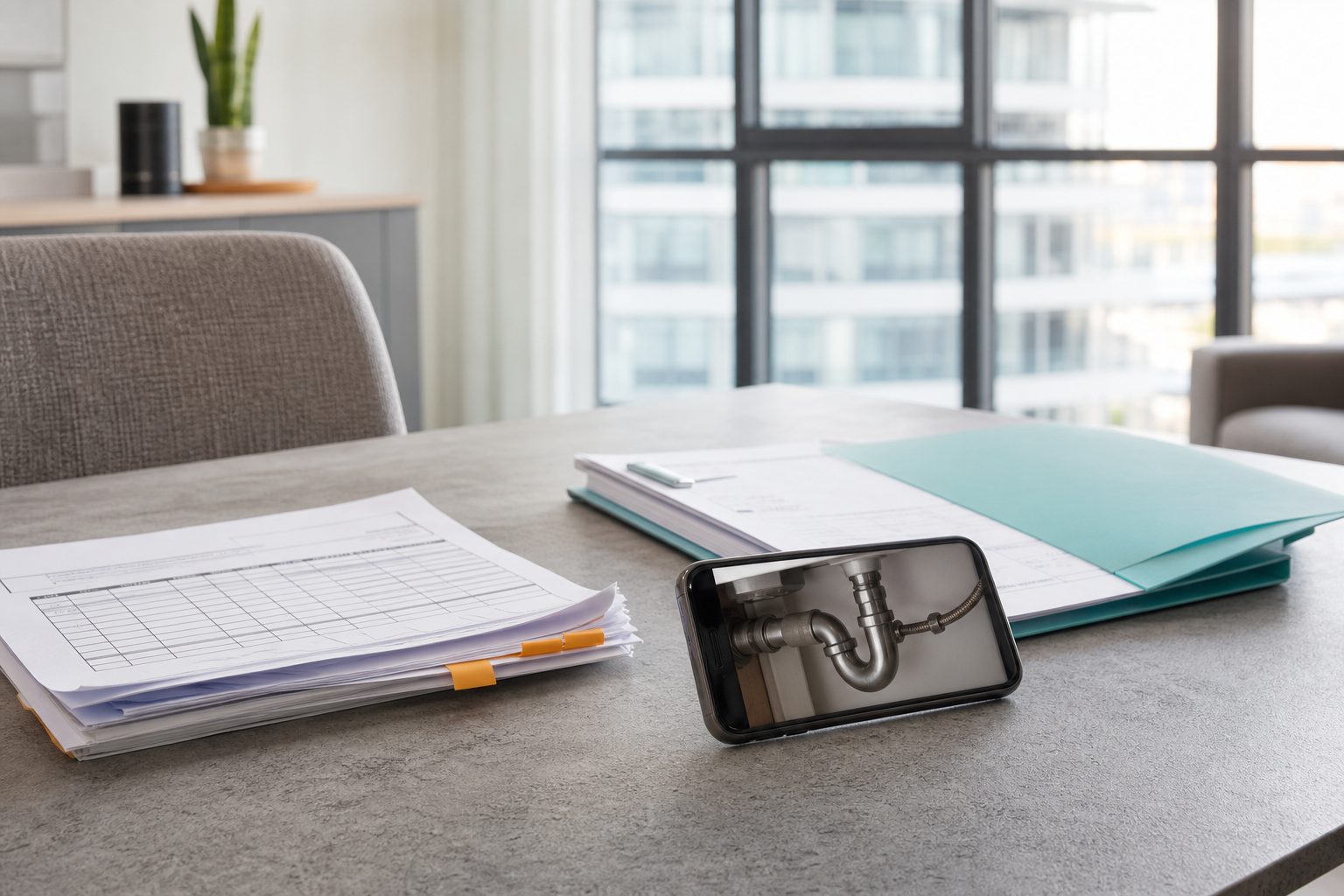
If you self-perform repairs, keep a log with the same details: what you did, how long it took, and any supplies purchased. Staple or scan receipts for materials to the work record. If you hire handymen or contractors, ask them to specify what they did in plain language. "Cleared kitchen sink clog with auger, replaced P-trap, tested for leaks" is better than "plumbing repair."
Attach all supporting paperwork: receipts, inspection reports, and any communication about the work. This is especially important if the repair was done in stages or required return visits. Match work orders, invoices, and receipts to the original tenant notice in your file.
Before and After Photos Shot From the Same Position
Photos are some of the strongest evidence you can bring into small claims court, but only if they clearly show the problem and the result. The most effective way to prove a repair was needed and completed is to take before and after photos from the same angle and distance. This gives the judge a direct comparison of the issue and the fix.
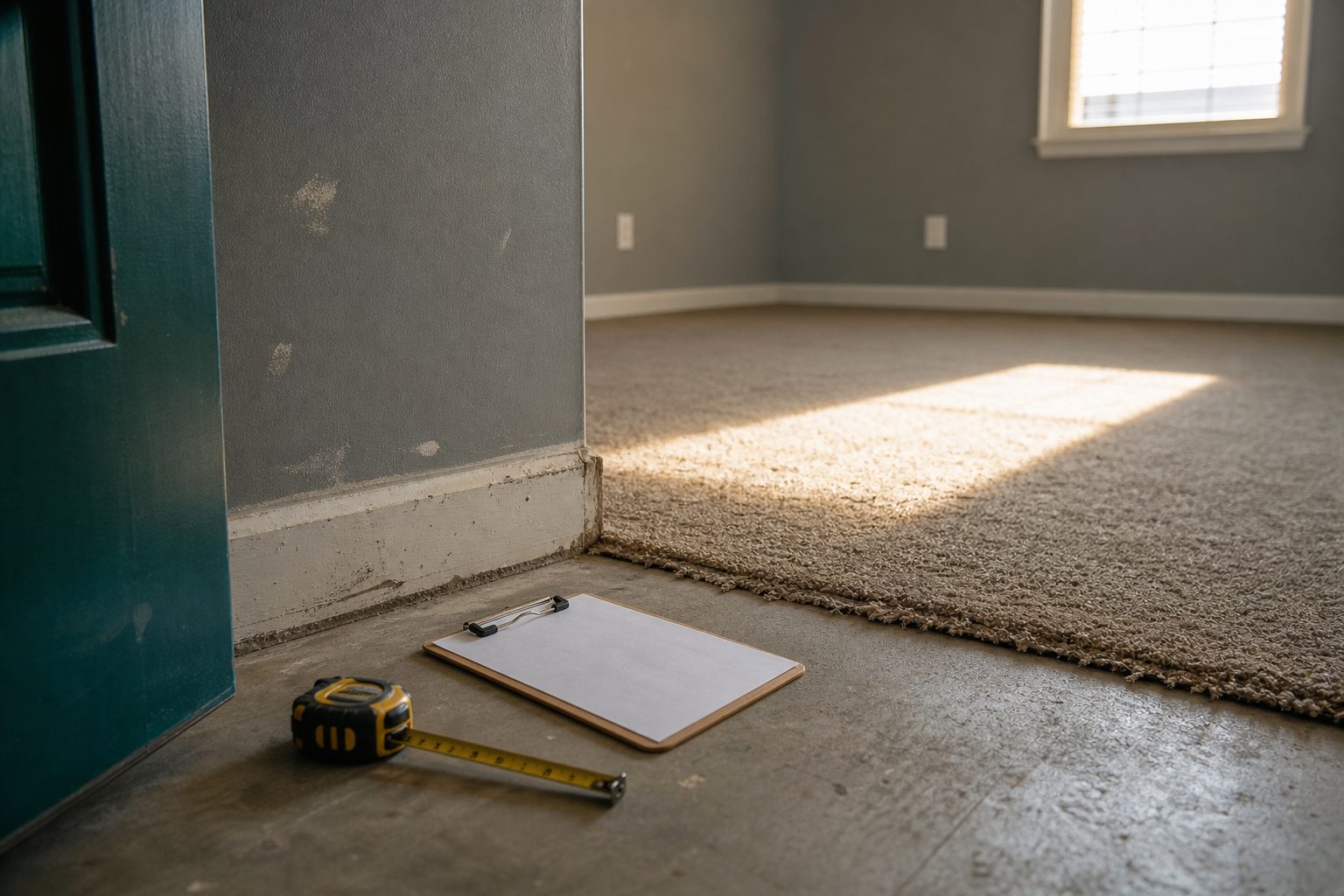
When taking the "before" photo, step back enough to show the location in context. Include a feature such as a door or outlet in the frame, so the judge can tell exactly where the issue is. After the repair, take the "after" photo from the same spot. Make sure lighting is similar, and try to match the framing as closely as possible.
If the repair is inside a fixture or wall, take a photo with the broken part exposed, one during the work, and a final shot with everything reassembled. Store all photos in your repair file, labeled with the date and a brief description. If the tenant provided photos, keep those as well, even if they are blurry or unclear. They still document the initial report.
See how LeakTicket handles this for property management
Keeping a Per Unit Repair History You Can Print on Demand
When a repair dispute drags into court, the ability to print or email a complete repair history for the unit can make all the difference. Judges want to see if the problem is recurring, if there is a pattern of neglect, or if the landlord addresses issues promptly. A running log of all reported problems, with dates, photos, and invoices, makes your case much stronger.
Organize by Unit and Date
Keep a repair log for each unit. For every repair, record the tenant's notice, your response, work orders, photos, and invoices. File entries by date, with the most recent on top. This lets you quickly show the judge the timeline of repairs and responses for any given problem.
Include All Communication
Attach emails, texts, or maintenance portal messages related to each repair. If there were delays, document the reason: vendor scheduling, parts on backorder, or tenant unavailability. This shows the court you took the issue seriously, even if it was not fixed overnight.
Be Ready to Export or Print
A digital system makes this process much easier. If your records are on paper, keep them in a binder by unit. If you use software, make sure you can export a full report for each unit, including all attachments. Many property management tools now offer this feature, and it pays off if you ever need to prove your case to a judge.
Common Evidence Gaps and How to Close Them This Week
Even careful landlords miss steps in the documentation process. The most common evidence gaps are missing tenant notices, unclear photos, vague invoices, and incomplete repair histories. These gaps often surface only when you are already in court, and by then it is too late to fix them.
- Missing Tenant Notice: If you cannot find the original message, ask tenants to use a maintenance portal or email for future requests. Follow up all phone calls with a written summary and ask for confirmation.
- Unclear Photos: Start taking standardized before and after photos for every repair, even minor ones. Use the same position and lighting. Save originals, not screenshots.
- Vague Invoices: Require vendors, even handymen, to list the exact work performed on every invoice. If you do repairs yourself, keep your own detailed log.
- Scattered Files: Consolidate records by unit in a single folder or digital system. Scan paper documents and label files with the date and unit number.
- Forgotten Communication: Forward or print all repair-related texts and emails, and add them to each repair entry.
Take one morning this week to audit your current repair records. Pick a unit with a recent repair and see if you can produce the tenant notice, photos, the vendor's detailed invoice, and a timeline of events. If anything is missing, update your process now. The next time a dispute arises, you will have a complete file ready to go.
Landlords who want airtight documentation for every repair often use a system that collects tenant requests, photo evidence, vendor dispatch records, and repair history in one place. A maintenance request portal with photo intake and print-on-demand reports, such as the platform offered by LeakTicket, can help close gaps and simplify your court-ready file.