Which Buildings and Which Jobs Fall Under the Rule
The EPA's Renovation, Repair, and Painting (RRP) rule applies to homes and child-occupied facilities built before 1978. This is the year lead-based paint was banned for residential use. Any work that disturbs painted surfaces in these buildings must comply unless you can document, with an approved test, that the area is lead-free.
The rule covers rental homes, duplexes, apartments, and common areas, as well as in-home daycares and preschools. Even a single-family rental, if built before 1978, falls under RRP when certain work is done. Tenant repairs, capital improvements, and turnovers involving painted surfaces risk triggering the requirements.
Most routine work is included: painting, window replacement, drywall repair, and electrical or plumbing tasks that scrape or cut painted surfaces. If you disturb paint in these settings, you need to know whether RRP applies before you start.
Keep reading: Anatomy of a Code Enforcement Case After a No Heat Complaint
The Square Foot Thresholds That Trigger Full Compliance
The RRP rule does not apply to every minor nick or nail hole. The EPA sets thresholds to distinguish between minor work and projects that require full lead-safe procedures. If the total area of disturbed painted surface is six square feet or more in a room, or twenty square feet on the building's exterior, the full suite of RRP practices is mandatory.
This means that patching a small interior hole, or drilling one or two holes, usually falls below the limit. However, replacing a window, scraping peeling paint, or cutting into exterior siding almost always exceeds the threshold, especially once you add up all the spots worked on during a project.
These measurements are cumulative per room per job. If you patch two holes of three square feet each in a bedroom, together they meet the threshold. The same goes for exterior work: scraping ten square feet on two walls is twenty square feet total.
Firm Certification and the Certified Renovator on Site
Landlords and property managers who hire out renovation work have two main obligations under RRP. First, the business itself, whether a sole proprietor, LLC, or corporation, must hold EPA firm certification. This is a simple application and a fee, but it is not automatic. If you perform covered work yourself, without proper firm certification, you are out of compliance.
Second, every job subject to RRP must have at least one trained Certified Renovator involved. To become certified, a person must complete an eight-hour class from an EPA-accredited trainer. The Certified Renovator is responsible for setup, work practices, cleaning, and verification. While workers can be trained on the job, at least one certified individual must direct the process and be available to oversee critical steps.
If you use outside contractors, you must verify that both their firm and the lead worker are currently certified. If you use your own staff, your business must be certified, and at least one employee must have valid renovator training. This is true even if you only manage a handful of older units.
Keep reading: Why Landlord Insurance Now Turns on Roof Age and Water Claims
Containment, Prohibited Practices, and Cleaning Verification
Setting Up Containment
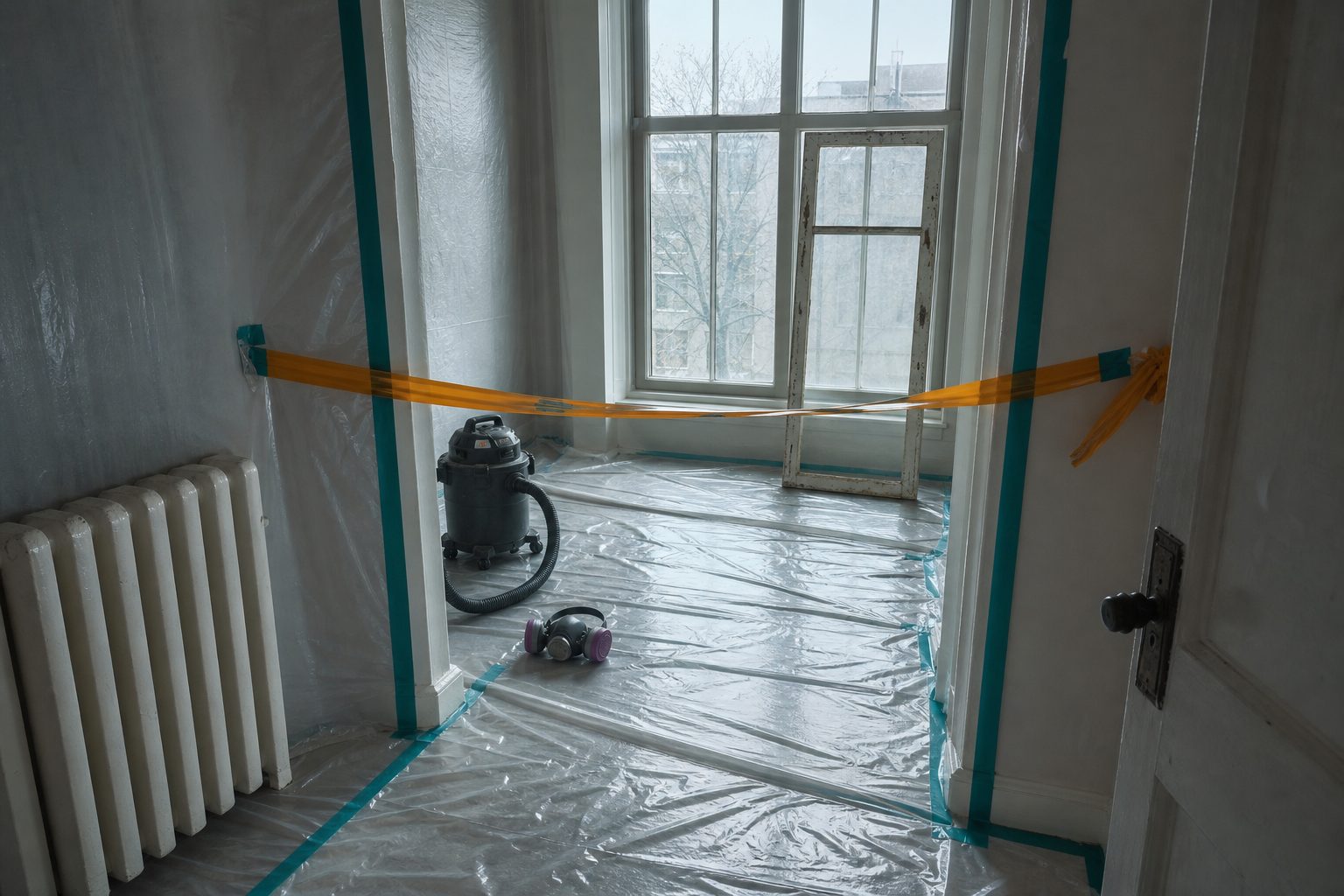
Containment is the heart of RRP. Before starting any work, you must isolate the area to prevent dust and debris from spreading. This means laying down plastic sheeting on floors and furniture, taping off doors and vents, and posting warning signs. Outdoor work requires ground covering and barriers to block foot traffic and wind-borne dust.
Prohibited Work Practices
The EPA bans certain high-dust methods outright. You cannot use open-flame burning or torching, high-speed paint removal tools without shrouds and HEPA vacuums, or dry sanding and scraping without containment. Power washing painted surfaces is not allowed if it might spread lead dust or chips.
Cleaning and Verification
All dust and debris must be thoroughly cleaned before the work area can be returned to occupancy. This means HEPA vacuuming and wet wiping horizontal surfaces. The Certified Renovator must perform a cleaning verification using EPA-approved wipes or, in some states, a clearance dust test by a licensed risk assessor. Failing to pass leads to more cleaning and retesting.
These steps are not suggestions, they are required. Documentation of each step is part of the compliance record, and missing a procedure can mean a violation, even if no one is harmed.
The Records You Must Keep for Three Years
Landlords and managers must keep detailed records for each job subject to the RRP rule. The EPA requires you to retain these documents for three years from the completion of the project. The basic set includes:
- Proof of firm certification and Certified Renovator training
- Copies of pre-renovation lead hazard pamphlets given to tenants
- Work logs showing start and end dates, locations, and the nature of work
- Photos or diagrams of containment setup
- Signed checklists from the Certified Renovator confirming compliance with work practices
- Cleaning verification results or clearance test results
In practice, the EPA expects you to be able to produce these records upon request. If you subcontract work, you must collect documentation from the contractor for your files. Missing or incomplete paperwork is one of the most common violations, often leading to fines even when the physical work was done correctly.
See how LeakTicket handles this for property management
Lead Disclosure Duties at Lease Signing Under Title X
The RRP rule focuses on renovation activities, but lead-based paint disclosure is a separate federal duty. Under Title X, the Lead-Based Paint Disclosure Rule, landlords must tell new tenants about known lead hazards and provide a copy of the EPA pamphlet on lead safety in housing. This requirement applies to any pre-1978 rental, whether or not you have recently done repairs.
You must also disclose any records or reports about lead-based paint or lead hazards in your possession. This includes prior test results, risk assessments, or abatement documentation. The tenant must sign an acknowledgment of receipt, and you must keep this form for at least three years from the start of the lease.
Failure to provide lead disclosures is a separate, enforceable violation. Some state and local governments also have their own disclosure requirements, so always check for local rules that may add steps or paperwork.
The Minor Repair Exemption and Where Owners Misread It
The RRP rule does allow an exemption for "minor repairs and maintenance" that disturb less than six square feet of paint per room, or twenty square feet outdoors, and do not involve window replacement. This is sometimes called the "minor repair rule." Routine tasks like driving a nail, hand-painting trim, or drilling a small hole for a cable line often fall under this exemption.
However, many owners misread this as a license to ignore RRP for almost any small job. The exemption does not apply if the work involves practices that create excessive dust, such as power sanding, demolition, or open-flame burning, regardless of area size. It also does not exempt clearance testing or recordkeeping if you cross the thresholds during the course of a repair series.
Repeated small jobs in the same room can quickly add up. The EPA considers the total area disturbed during a project, not just each task in isolation. Ignoring this can lead to accidental violations, especially during turnovers or multi-day repairs.
How Enforcement and Penalties Actually Work
Inspections and Complaints
The EPA enforces the RRP rule through both scheduled inspections and responses to complaints. Tenants, neighbors, and even contractors can file reports if they believe unsafe renovation practices are occurring. Inspectors may request access to your documentation and inspect the property during or after work is completed. Missing records or clear evidence of non-compliant work often leads to citations.
Fines and Settlement
Penalties for RRP violations can be substantial. The EPA uses a per-violation, per-day structure. Forgetting to provide lead pamphlets, skipping cleaning verification, or failing to use certified staff can each count as separate violations. The total penalty can run into the tens of thousands of dollars for a single project, depending on the scope and number of units involved.
Most enforcement actions settle for a negotiated amount if the landlord cooperates and corrects the issues. Repeat offenders or cases involving child lead poisoning often draw higher fines and more intensive follow-up. The EPA may also require additional training or third-party oversight as part of a settlement.
Local agencies in some states also have delegated authority to enforce RRP. This can mean state-level investigations, additional permit requirements, and even higher penalties. Many landlords first become aware of the rule after a tenant complaint or a failed HUD inspection, so proactive compliance is far less costly than a reactive response.
For small operators, keeping all documentation organized and accessible is often the hardest part of staying in compliance. Tools that centralize maintenance requests, track vendor assignments, and store repair history by unit can make it much easier to fulfill both the RRP recordkeeping requirements and routine turnover obligations.